Countries of South America
South America has 12 of the world's 195 countries in our count, in 1 regions.
Together they have about 440.2 million inhabitants, 5% of the population of all 195 countries, on 17,734,563 km².
The largest country is Brazil, the smallest Suriname.
The most populous country is Brazil, the least populous Suriname.
Guyana has the highest GDP per person, Venezuela the lowest.
Bolivia has the youngest population (median age 25.5 years), Chile the oldest (37.4 years).
All 12 countries of South America
Sorted by population. Every country links to its own page.
| Country | Capital | Population | Areakm² |
|---|---|---|---|
 Brazil | Brasília | 213.6M | 8,510,417 |
 Colombia | Bogotá | 53.9M | 1,141,748 |
 Argentina | Buenos Aires | 46M | 2,796,427 |
 Peru | Lima | 34.9M | 1,285,216 |
 Venezuela | Caracas | 28.6M | 929,690 |
 Chile | Santiago | 19.9M | 756,102 |
 Ecuador | Quito | 18.4M | 257,215 |
 Bolivia | Sucre | 12.7M | 1,098,581 |
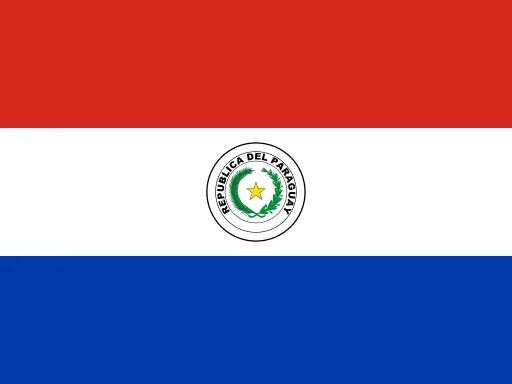 Paraguay | Asunción | 7.1M | 406,752 |
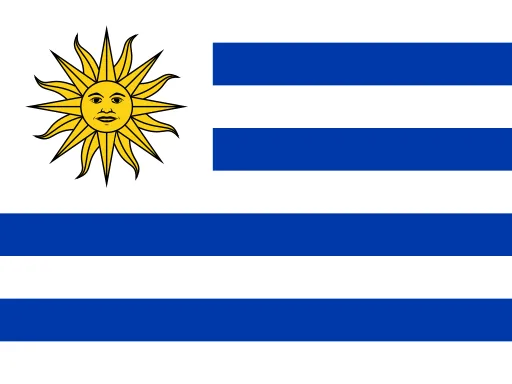 Uruguay | Montevideo | 3.4M | 173,626 |
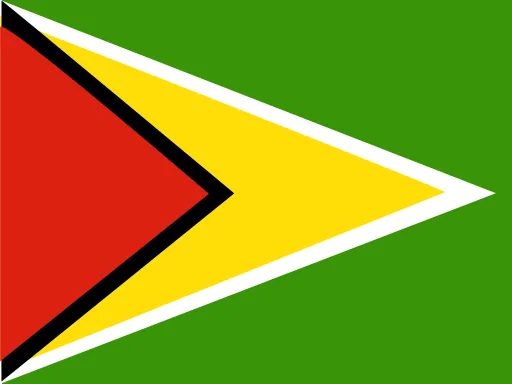 Guyana | Georgetown | 840,890 | 214,969 |
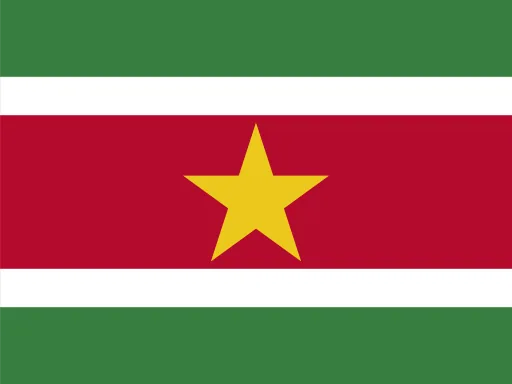 Suriname | Paramaribo | 645,256 | 163,820 |
Questions about the countries of South America
How many countries are there in South America?
We count 12 countries in South America: Argentina, Bolivia, Brazil, Chile, Colombia, Ecuador, Guyana, Paraguay, Peru, Suriname, Uruguay, and Venezuela.
What is the largest country in South America?
The largest country in South America is Brazil, with 8,510,417 km².
What is the smallest country in South America?
The smallest country in South America is Suriname, with 163,820 km².
Which country in South America has the most inhabitants?
The most populous country in South America is Brazil, with about 213.6 million inhabitants.
Each country is counted on one continent only, following Natural Earth: Russia, for example, is counted in Europe and Turkey in Asia. Regions are Natural Earth's subregions, which follow the UN's M49 standard. Capital, region, borders and country code: Natural Earth, capitals checked by hand. Flag: flag-icons. How we check our data →